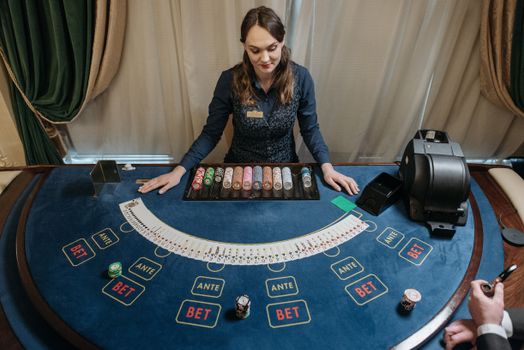
Blackjack is more than just a game of luck—it’s a battle of wits, strategy, and psychology against the dealer. With the right approach, players can tip the odds in their favor and turn what seems like a simple card game into a skillful pursuit. Whether you play at a brick-and-mortar casino or online, understanding the best strategies for playing blackjack is key to increasing your chances of winning. In this comprehensive guide, we’ll reveal proven tactics, psychological insights, and advanced techniques that go well beyond the basics, helping you elevate your blackjack game to the next level.
Understanding Blackjack Odds and House Edge
Before diving into winning strategies, it’s important to know the numbers you’re up against. Blackjack is one of the most favorable casino games for players in terms of house edge—the mathematical advantage the casino has over you.
The typical house edge in blackjack, when played with optimal strategy, ranges from 0.5% to 1%. This is significantly lower than many other casino games. However, this tiny edge only applies if you make the right decisions on every hand. For comparison:
.png)
| Casino Game | Average House Edge |
|---|---|
| Blackjack (with basic strategy) | 0.5% – 1% |
| American Roulette | 5.26% |
| Baccarat | 1.06% (banker bet) |
| Slots | 4% – 10% (varies by machine) |
| Craps (pass line bet) | 1.41% |
The difference is clear: blackjack offers some of the best odds if you play smart. But what does “playing smart” actually mean? Let’s examine the strategies that can help you win more often.
The Power of Basic Strategy: Your First Line of Defense
Basic strategy is the mathematically optimal way to play every hand in blackjack, based on your cards and the dealer’s upcard. Developed through advanced computer simulations, this strategy minimizes the house edge and is the foundation for all winning blackjack play.
Here’s what basic strategy covers: - When to hit or stand (e.g., always hit 12 against a dealer’s 2 or 3) - When to double down (e.g., double down on 11 versus a dealer’s low card) - When to split pairs (e.g., always split Aces and 8s) - When to surrender (if available)Using a basic strategy chart increases your chances of winning by ensuring you never make a costly mistake. For example, standing on 16 against a dealer’s 10 may feel “safe,” but mathematically, hitting is the right move—basic strategy removes guesswork.
Fact: According to a 2022 MIT study, using basic strategy reduces the house edge to as low as 0.5%, while guessing or “playing by feel” can increase the house edge to over 2%.
If you’re new to blackjack, keep a basic strategy chart handy (many casinos allow it at the table), or memorize the most crucial decisions for common hands. This single step can save you hundreds of dollars over time.
Card Counting: Myth vs. Reality and Modern Variations
Card counting is perhaps the most famous advanced blackjack tactic. Popularized by Hollywood and the legendary MIT blackjack team, card counting is legal (though often frowned upon by casinos) and can shift the odds in your favor.
How does it work? By keeping track of the ratio of high to low cards left in the deck, you can adjust your bets and playing decisions. More high cards (10s, face cards, Aces) favor the player, while more low cards favor the dealer.
The most common system is the Hi-Lo count: - Assign +1 to cards 2-6, 0 to 7-9, and -1 to 10-Ace. - Keep a running count as cards are dealt. - Adjust your bets higher when the count is positive, lower when negative.Fact: Skilled card counters can gain a 0.5% to 1.5% advantage over the casino. However, it’s not as easy as it looks—effective card counting requires practice, focus, and a solid grasp of basic strategy.
Modern casinos use multiple decks and automatic shuffling to combat card counters. Online blackjack, especially with continuous shuffling or digital randomization, makes card counting nearly impossible. Still, in live dealer games with limited decks, card counting can be viable.
If you’re interested in card counting, start with free online trainers and practice in low-stakes environments before attempting it in a real casino.
Betting Systems: Risk Management and Psychological Advantages
While no betting system can overcome the house edge in the long run, structured betting can help manage your bankroll, control losses, and maximize hot streaks.
Popular betting systems for blackjack include: - Flat Betting: Wagering the same amount every hand, which minimizes risk and variance. - Paroli (Reverse Martingale): Doubling your bet after each win and reverting to the base bet after a loss. This system capitalizes on winning streaks while limiting losses. - Oscar’s Grind: Increasing your bet by one unit after a win, aiming for small, consistent profits.Beware of aggressive systems like the Martingale (doubling after every loss), which can quickly wipe out your bankroll during a losing streak.
Fact: According to a 2021 Gambling Commission report, players using conservative betting systems like flat betting lasted 2.5 times longer on average than those using progressive systems.
The psychological advantage of a betting system is real: it reduces impulsive decisions and helps you stick to a plan, both vital for long-term success.
Game Selection: Rules Matter More Than You Think
Not all blackjack games are created equal. The specific rules at your table can significantly impact your chance of winning. Smart players always seek out games with the most favorable rules.
Key rule variations to look for: - Payout for blackjack: A 3:2 payout is standard and best; avoid 6:5 tables, which increase the house edge by 1.4%. - Dealer hits or stands on soft 17: If the dealer stands, the house edge drops by about 0.2%. - Number of decks: Fewer decks are better for the player. Single-deck games offer the lowest edge, though they are increasingly rare. - Doubling down: The option to double on any two cards or after splitting is more advantageous. - Surrender options: Early surrender (before the dealer checks for blackjack) is rare but very player-friendly.Example: At a Las Vegas casino in 2023, a player at a single-deck 3:2 blackjack table with liberal rules faced a house edge of just 0.15%, while a player at a 6:5 six-deck table faced an edge of over 2%.
Always check the posted rules before sitting down—sometimes even moving one table over can dramatically boost your odds.
Bankroll Management and Discipline: The Overlooked Winning Edge
The final strategy, and arguably the most important, is managing your money and emotions. Many skilled players lose not because of bad cards, but because of poor bankroll management.
Key principles: - Set a budget before you play and stick to it, no matter what. - Use betting units (e.g., 1% of your total bankroll per hand) to avoid big swings. - Know when to walk away—whether you’re ahead or behind, don’t chase losses. - Keep track of your results and analyze your sessions for improvement.Fact: A 2023 survey of blackjack players found that those who set win/loss limits and tracked their sessions reported 30% more consistent results than those who played without structure.
Discipline is the difference between a winning streak and a disaster. Treat blackjack as a marathon, not a sprint, and you’ll enjoy the game—and your profits—much more.
Smart Play: Maximizing Your Blackjack Experience
Winning at blackjack isn’t about chasing every big hand or memorizing a thousand tricks. It’s about understanding the math, playing with discipline, and making small edges work in your favor over time. Whether you’re a casual player or a serious strategist, these approaches will help you get the most out of every session:
- Master basic strategy and never stop refining your play. - If you want an extra edge and have the opportunity, learn card counting—but only where it’s possible. - Use betting systems for structure, not as a guarantee of profit. - Always choose tables and games with the best rules. - Manage your bankroll with the same care you give your playing decisions.With these strategies, you’ll turn blackjack from a game of chance into a game of skill—one where your decisions really matter.